
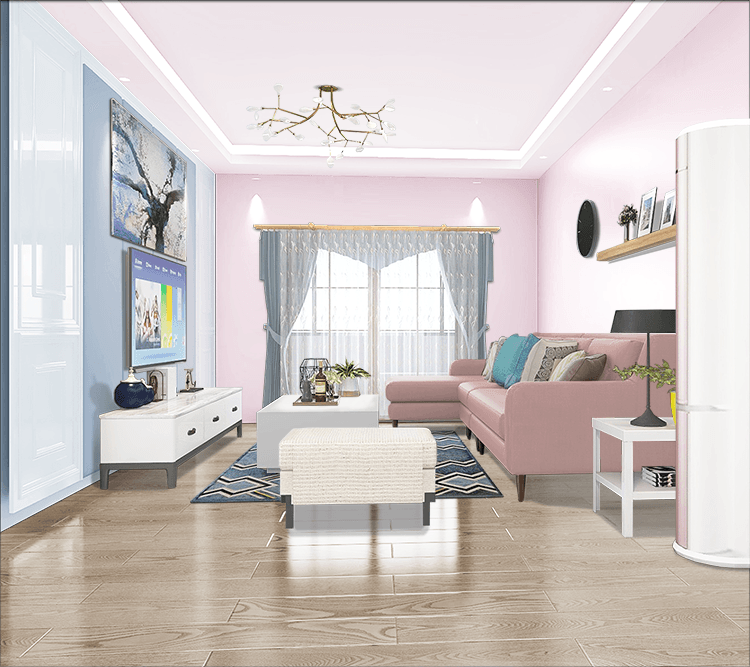
There’s a reason some mobile games stick with you long after others have been deleted. When a puzzle game gives you something to build — something that feels like yours — the loop changes from passing time to looking forward to it.

My Little Home — where match-3 puzzles unlock room-by-room home design.
The Match-3 Formula Everyone Knows
Match three identical items. Clear the board. Reach the goal. Move to the next level.
It’s a formula that works. The satisfaction of watching tiles disappear, the quick dopamine hit of a combo, the low-stakes pressure of a timer — these are why match-3 games have dominated mobile charts for over a decade.
But the formula has a ceiling. Play long enough and the levels blur together. The rewards feel abstract. You clear level 347, then level 348, then 349, and the only thing that changes is the number.
That’s where the newer generation of match-3 games is doing something different.
What Happens When You Add a Creative Layer
Some of the most successful mobile games of the past few years — think Homescapes, Project Makeover, Merge Mansion — share one trait: they give you something to show for your progress.
You don’t just earn points. You earn the ability to change something. Replace a worn-out sofa. Choose between a modern kitchen or a farmhouse one. See a room transform from bare to lived-in because of the levels you cleared.
This matters more than it sounds. Here’s why:
It Creates a Reason to Come Back
When your progress is visible — a room that looks different than it did yesterday — you have a reason to open the app again. Not just to beat a level, but to see what’s next. To finish the living room. To unlock the bedroom.
It Makes Failure Feel Smaller
Stuck on a level? In a pure match-3 game, that’s frustration with no upside. In a design-driven one, you still have the rooms you’ve already decorated. The game doesn’t reset to zero when a level beats you.
It Appeals to Two Different Player Types
Some people play for the puzzle. Some play for the aesthetic. A game that offers both doesn’t force you to choose — and doesn’t bore either type.
The Home Design Fantasy
There’s a specific fantasy these games tap into: the idea of starting fresh and making a space your own.
In real life, that’s expensive, time-consuming, and full of compromises. In a game, it’s immediate and consequence-free. You don’t need a contractor. You don’t need a budget. You just need to clear a few levels and the room is yours to design.
The settings vary — European manor, Japanese minimalist apartment, Korean cozy cottage — but the underlying appeal is the same: control over your environment, one small decision at a time.

Design choices range from furniture to wall colors, letting players build rooms that feel personal.
What to Look for in a Design-Forward Match-3 Game
Not every game that promises decoration delivers. Here’s what separates the ones that work from the ones that feel like a bait-and-switch:
Meaningful Choices
The best games give you real options. Not just “click here to place the only available sofa,” but actual alternatives — modern vs. traditional, bold colors vs. neutrals, minimal vs. layered. The design should feel like a decision, not a button press.
A Coherent Visual Style
The rooms should look like they belong together. If the art direction is inconsistent — a hyper-realistic lamp next to a cartoonish chair — the fantasy breaks. The best games commit to a visual language and stick with it.
Puzzles That Match the Pace
If the match-3 levels are brutally hard and the design rewards are sparse, the balance is off. You should feel like you’re making progress on both fronts. The puzzle difficulty should escalate gradually, not spike randomly to push in-app purchases.
A Sense of Completion
There’s something deeply satisfying about finishing a room. The best games let you see the before and after. They give you a moment to appreciate what you’ve built before moving you to the next space.

The before-and-after effect is what makes the design loop satisfying — seeing a space transform because of your effort.
The Genre’s Evolution
Match-3 games aren’t new. Bejeweled launched in 2001. Candy Crush dominated the early 2010s. But the genre has evolved from pure puzzle to puzzle-plus-something-else.
That “something else” has taken different forms:
- Narrative layers — stories that unfold as you progress, giving context to the puzzles
- Social features — teams, competitions, shared spaces
- Creative tools — decoration, design, customization
The creative layer seems to be the one with the most staying power. Narratives get repetitive. Social features require critical mass. But giving players something to build? That works at any scale.
Who These Games Are Actually For
The stereotype of mobile puzzle games is that they’re for casual players — people who want something mindless for a commute or a waiting room. But the design-forward versions attract a broader group:
- People who like interior design but don’t have the budget or space to do it in real life
- Puzzle players who want more than just a score to show for their time
- Creative types who enjoy making aesthetic decisions, even in a constrained system
- Stressed people who find the combination of low-stakes puzzles and satisfying visual progress genuinely calming
The common thread isn’t skill level or demographic. It’s the desire to see progress — real, visible progress — in a world where so much effort feels invisible.

The match-3 mechanics are familiar, but the rewards feed into something you can see and customize.
The Calm in the Loop
There’s a particular kind of calm that comes from these games. The puzzles are engaging enough to occupy your mind but not so demanding that they add stress. The design elements give you small, satisfying decisions without real-world consequences.
It’s not escapism exactly. It’s more like a controlled space — a pocket of your day where the rules are clear, the progress is visible, and the outcome is entirely up to you.
In a game like My Little Home, that loop looks like this: clear a match-3 level, earn coins, choose a piece of furniture, place it in a room, step back and look at what you’ve built. Then do it again.
The simplicity is the point. No complex social rules. No competitive pressure. Just a space to make your own, one puzzle at a time.
Final Thoughts
The best mobile games understand that players don’t just want to win — they want to feel like their time mattered. A match-3 game that ends with a score is fine. A match-3 game that ends with a room you designed is something you come back to.
If you’ve never tried the design-forward version of the genre, it’s worth exploring. The puzzle mechanics are familiar enough to pick up immediately. The creative layer is what makes it stick.
Images courtesy of Still in Awe / Fingertip Playland.
Related Reading
- Why Mobile Games With a Creative Layer Keep Players Longer
- The Psychology of “Before and After” in Game Design
- How Match-3 Games Became the Most Relaxing Genre on Your Phone